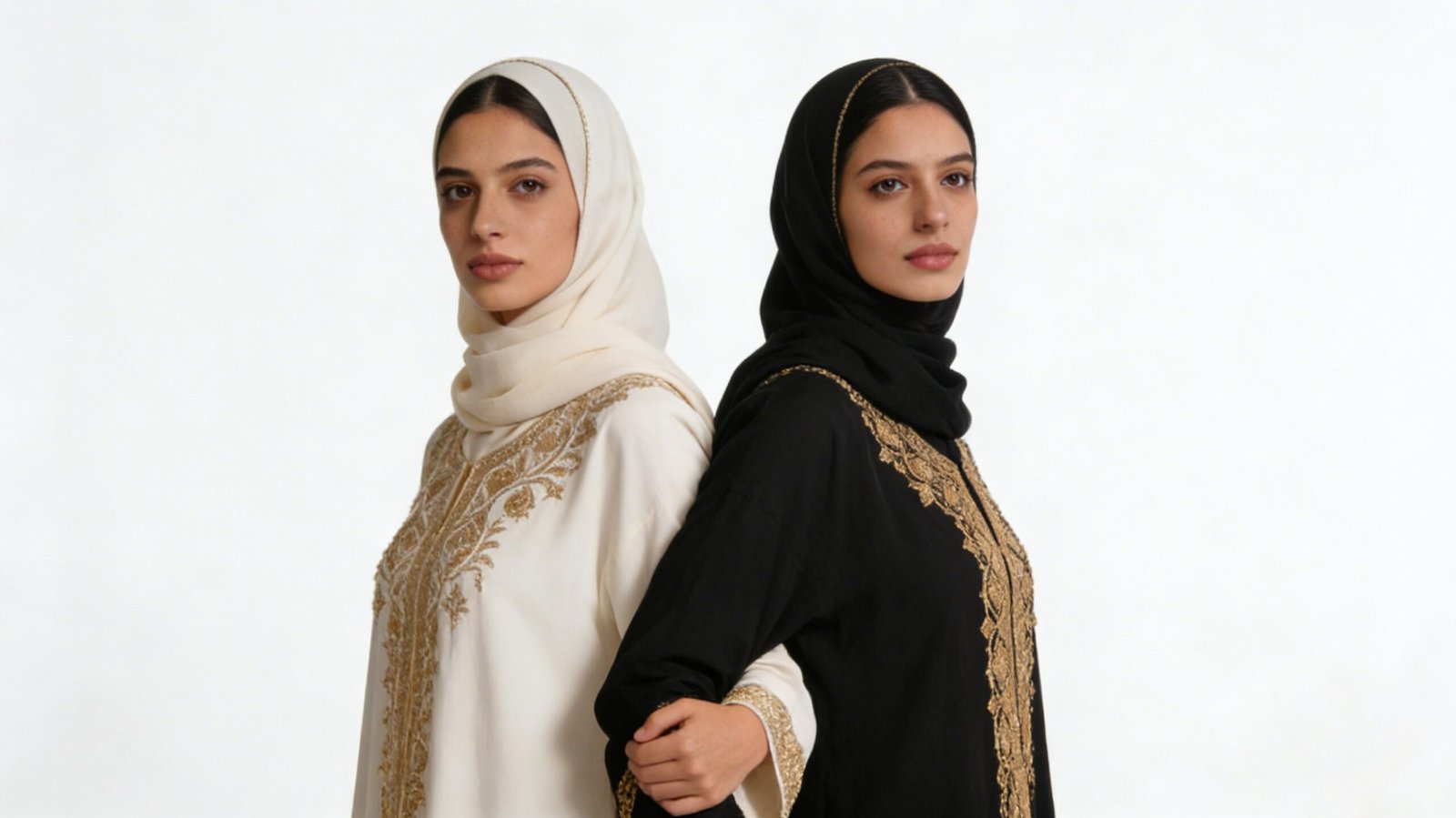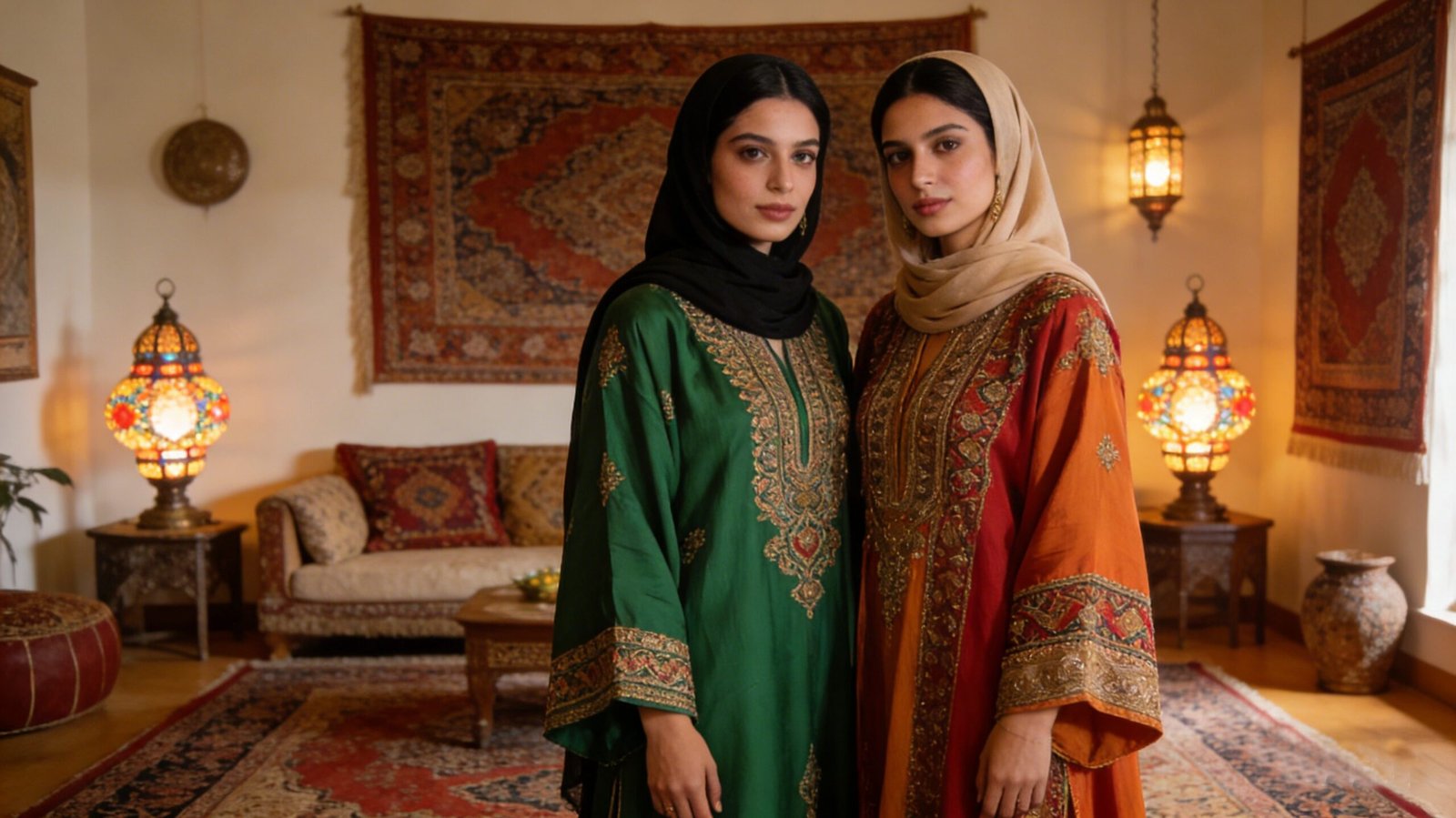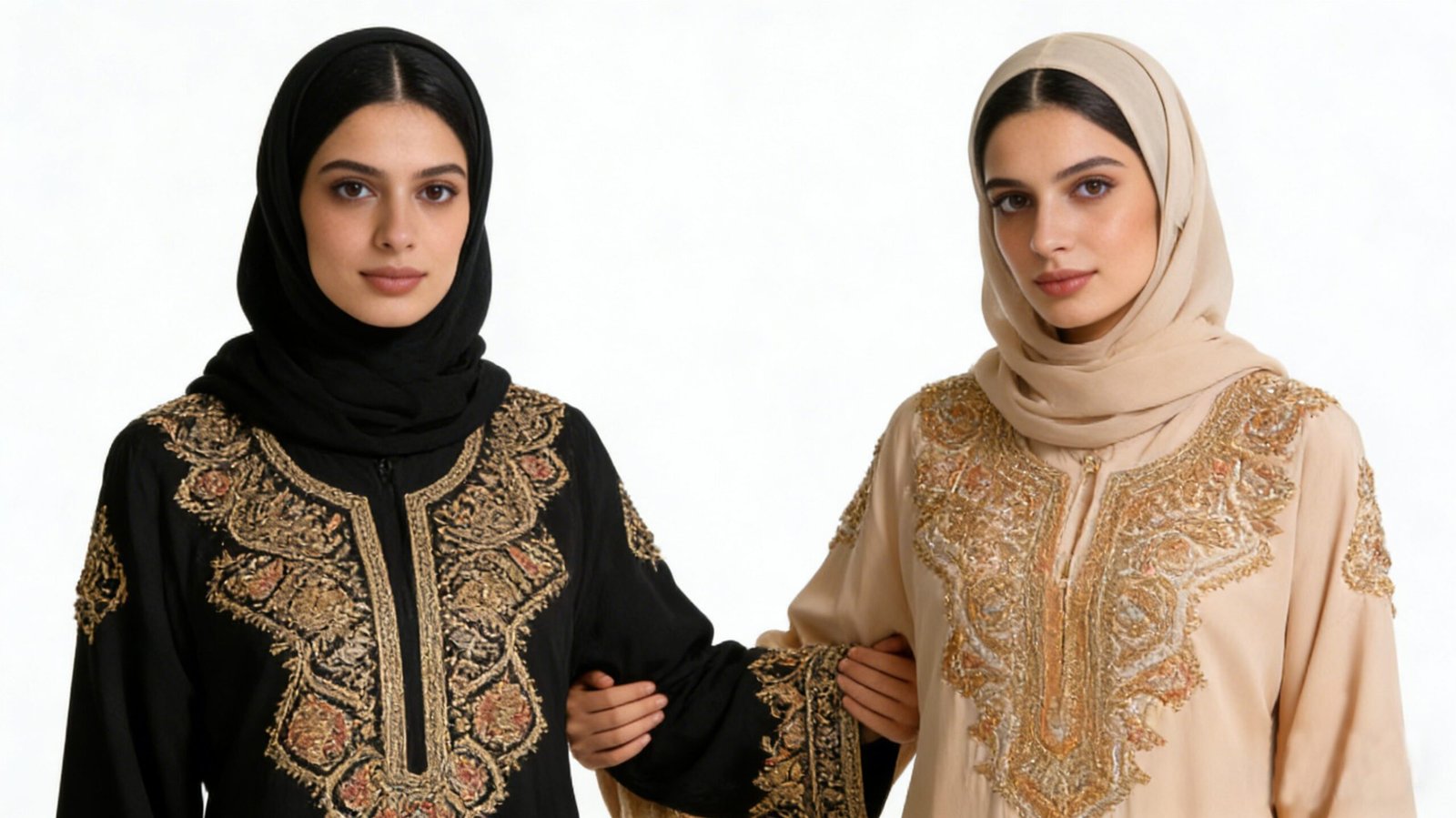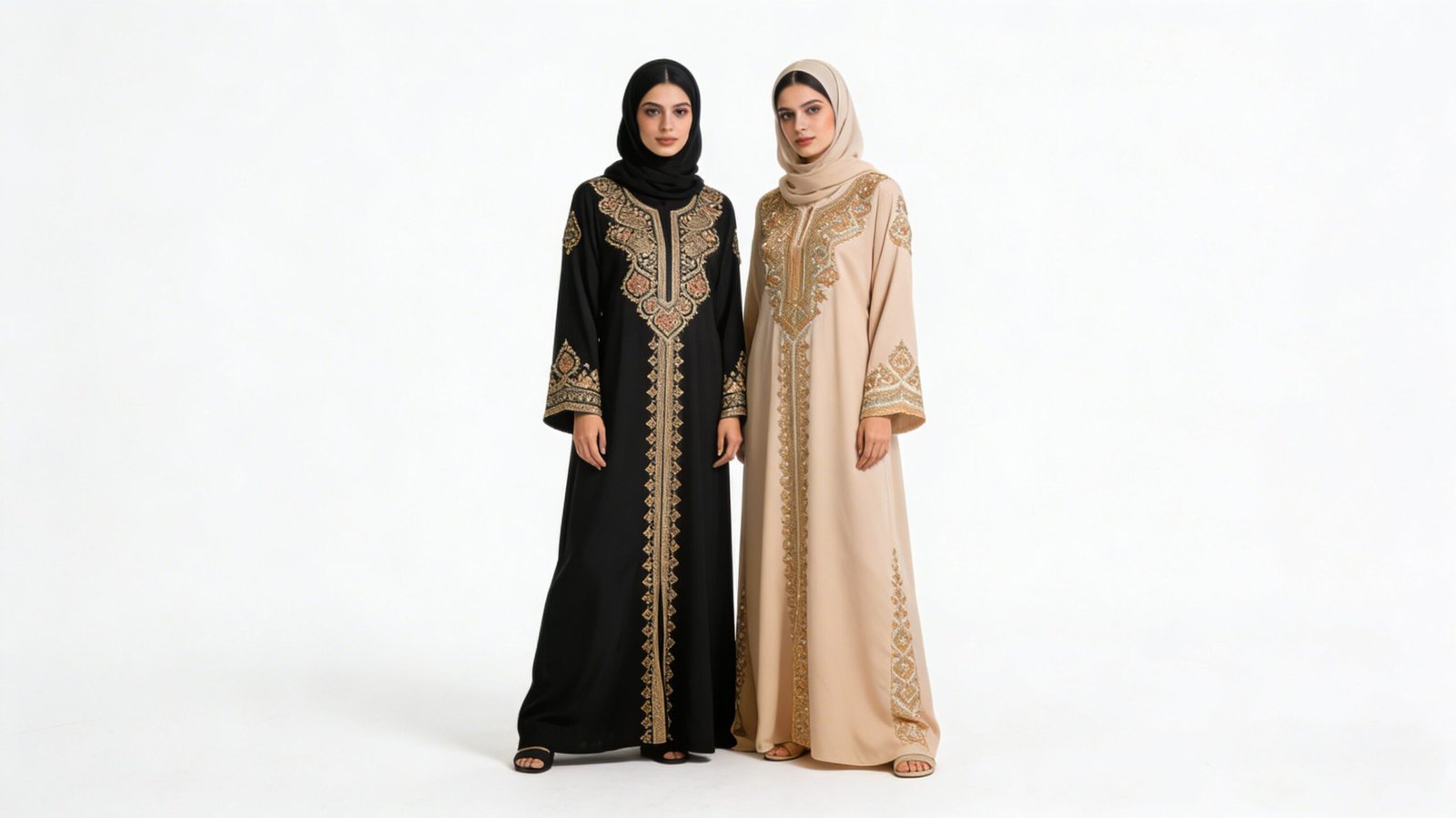
Table of Contents
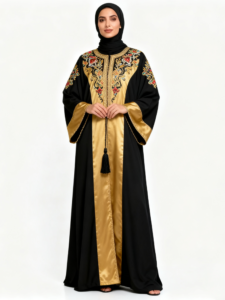
Abaya pricing isn’t guesswork—it’s a formula built on fabric, labor, and MOQ.
Whether you’re launching a brand or scaling your current line, understanding the numbers behind the price tag helps you protect margins and make smarter sourcing decisions.In this guide, we’ll walk through a real-world Abaya cost breakdown in plain English.
No jargon. No fluff. Just the numbers that actually matter.
What Goes Into Abaya Pricing?
At its core, Abaya pricing is driven by three variables:
fabric, labor, and minimum order quantity (MOQ).
Think of it like building a house: materials set the base cost, craftsmanship defines quality, and scale determines how efficiently everything is produced.
If you want a deeper framework for how manufacturers calculate costs,
Investopedia’s cost analysis framework
offers a solid financial perspective.
Fabric Costs in Abaya Pricing
Fabric is usually the largest variable in Abaya pricing.
Premium materials such as Nida, satin, silk blends, or custom-dyed textiles will raise the base cost immediately.
Lightweight everyday fabrics, on the other hand, keep pricing accessible.
How Fabric Affects Your Abaya Cost Breakdown
Every choice—weight, weave, finish, and colorfastness—changes the final number.
If you want practical ways to manage this, see our in-depth guide on
how to reduce fabric cost without lowering quality.
It’s one of the fastest ways to optimize your Abaya cost breakdown without sacrificing brand value.
Labor Costs in Abaya Pricing
Labor isn’t just “sewing time.” It includes pattern making, cutting, stitching, embellishment, quality checks, and packaging.
The more complex the design—embroidery, pleats, hand finishing—the higher the labor component of your Abaya pricing.
Skilled Craftsmanship vs. Mass Production
High-end Abayas require experienced technicians. That expertise shows in fit, drape, and durability.
While fast production may reduce cost, it often impacts consistency.
If your goal is long-term brand trust, labor quality should be treated as an investment—not an expense.
For a broader view of manufacturing cost structures,
TradeGecko’s manufacturing cost breakdown
explains how labor fits into total COGS.
How MOQ Impacts Abaya Pricing
MOQ (Minimum Order Quantity) determines how production costs are distributed.
A low MOQ means higher per-unit cost because setup, sampling, and material sourcing are spread over fewer pieces.
A higher MOQ lowers unit cost by maximizing efficiency.
Our MOQ Policy and What It Means for Your Abaya Cost Breakdown
We support growing brands with a flexible MOQ of 50 pieces per style.
This allows you to test designs without heavy inventory risk while still achieving a competitive Abaya pricing structure.
We also provide sample development before bulk production—learn more in our guide on
how many samples to order before bulk production.
Abaya Cost Breakdown: A Practical Example
Let’s break down a standard custom Abaya:
- Fabric: 40–50% of total cost (depends on material and sourcing)
- Labor: 25–35% (complexity, finishing, quality control)
- Overhead & Packaging: 10–15%
- MOQ Efficiency: Directly affects per-unit cost
This transparent Abaya cost breakdown helps you forecast margins before committing to production.
If you’re looking for end-to-end solutions, our
custom Abaya manufacturing services
are designed to keep both quality and pricing competitive.
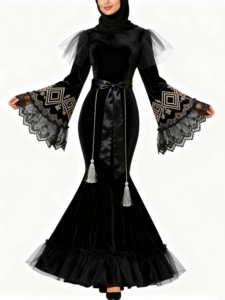
How to Lower Abaya Pricing Without Cutting Quality
Smart Sourcing and Design Choices
Want better margins? Focus on fabric optimization, standardized trims, and scalable designs.
Small adjustments—like selecting alternative weaves or simplifying construction—can dramatically improve your Abaya pricing.
Leverage MOQ and Ready Stock
Ordering closer to optimal quantities reduces unit cost.
We also offer large in-stock options for faster delivery and lower pricing on select styles.
It’s an easy win if you need immediate inventory without long production cycles.
Planning Your Next Abaya Collection?
Whether you need custom production, sample development, or ready stock,
we help you build a profitable collection with transparent Abaya pricing.
Start from 50 pieces per style, request samples, or order from available inventory today.
👉 Contact our pricing team to get a tailored quote.
FAQ: Abaya Pricing & Cost Breakdown
What is the minimum order quantity?
Our standard MOQ is 50 pieces per style. This allows flexible testing while maintaining efficient production costs.
Do you provide samples before bulk orders?
Yes. We offer sample development so you can review fit, fabric, and finishing before committing to large quantities.
Can I order from ready stock?
Absolutely. We maintain large in-stock selections for faster fulfillment and more competitive Abaya pricing.
How can I get a detailed Abaya cost breakdown?
Simply reach out through our contact page. We’ll provide a transparent quote covering fabric, labor, MOQ, and delivery.
Final Thoughts on Abaya Pricing
Understanding Abaya pricing isn’t just about numbers—it’s about making informed decisions that protect your brand.
With a clear Abaya cost breakdown, flexible MOQ, sample support, and ready stock options,
you can scale confidently while keeping quality front and center.
Ready to take the next step? Explore our
OEM & custom Abaya solutions
or get in touch today.