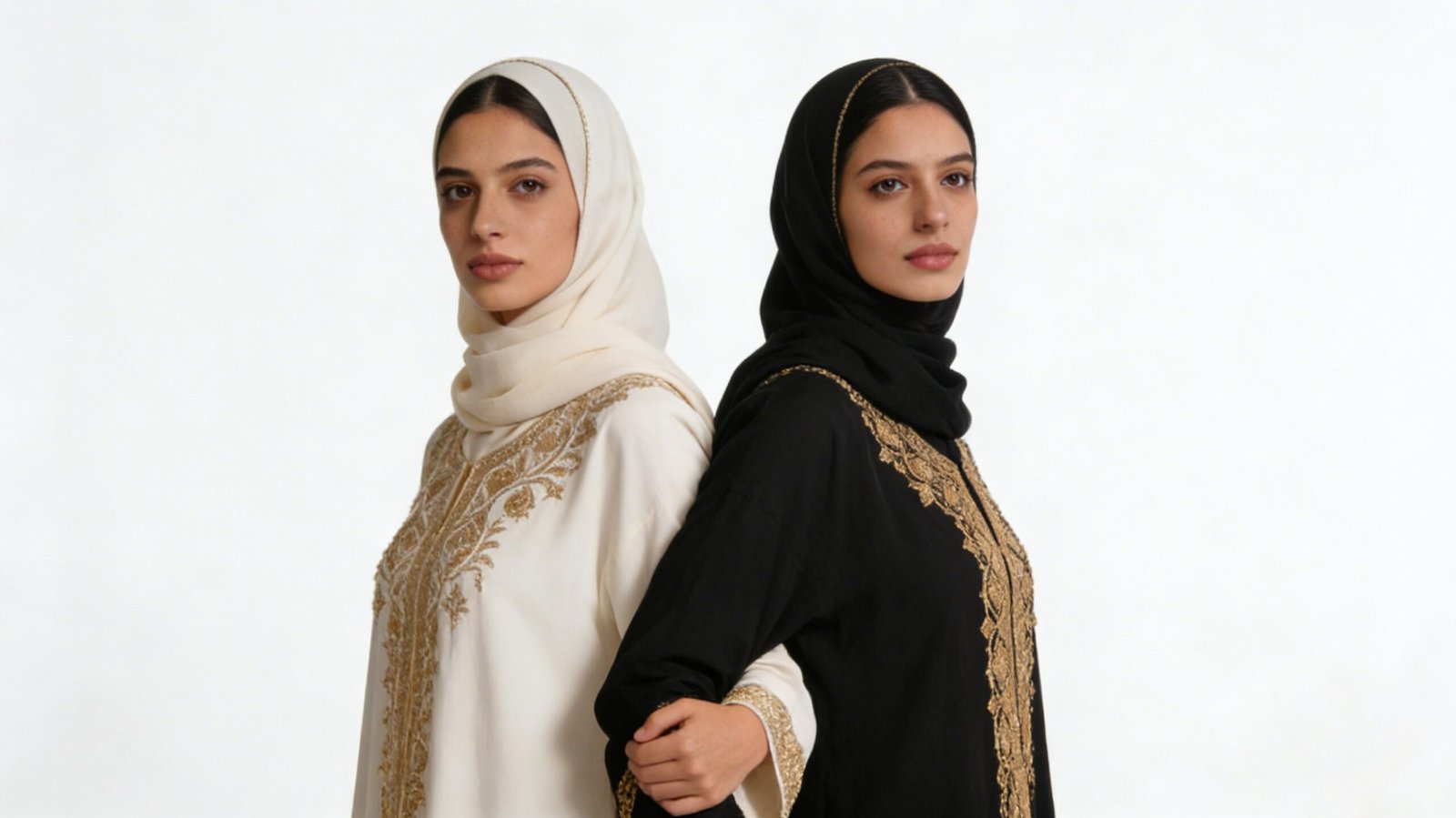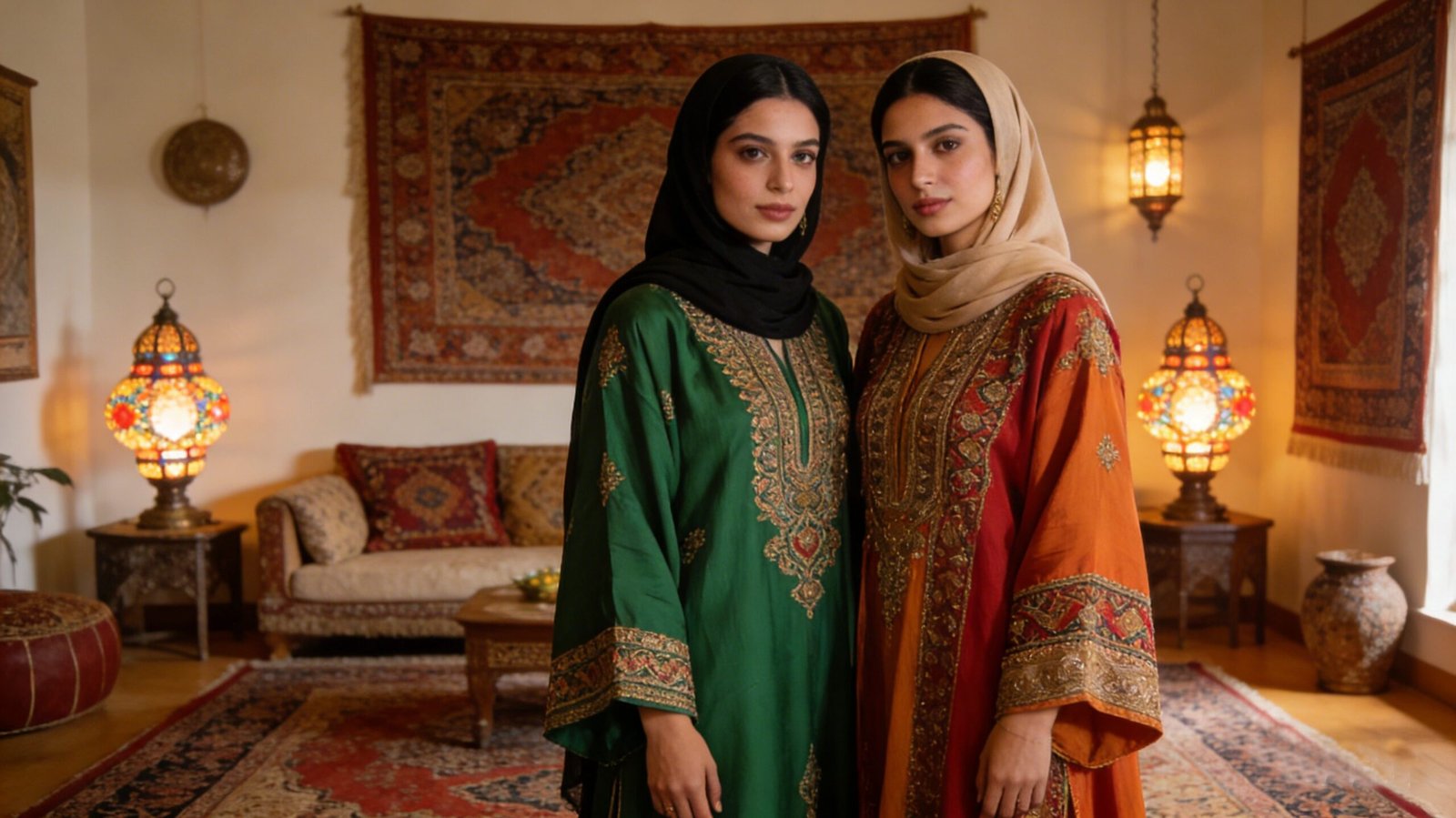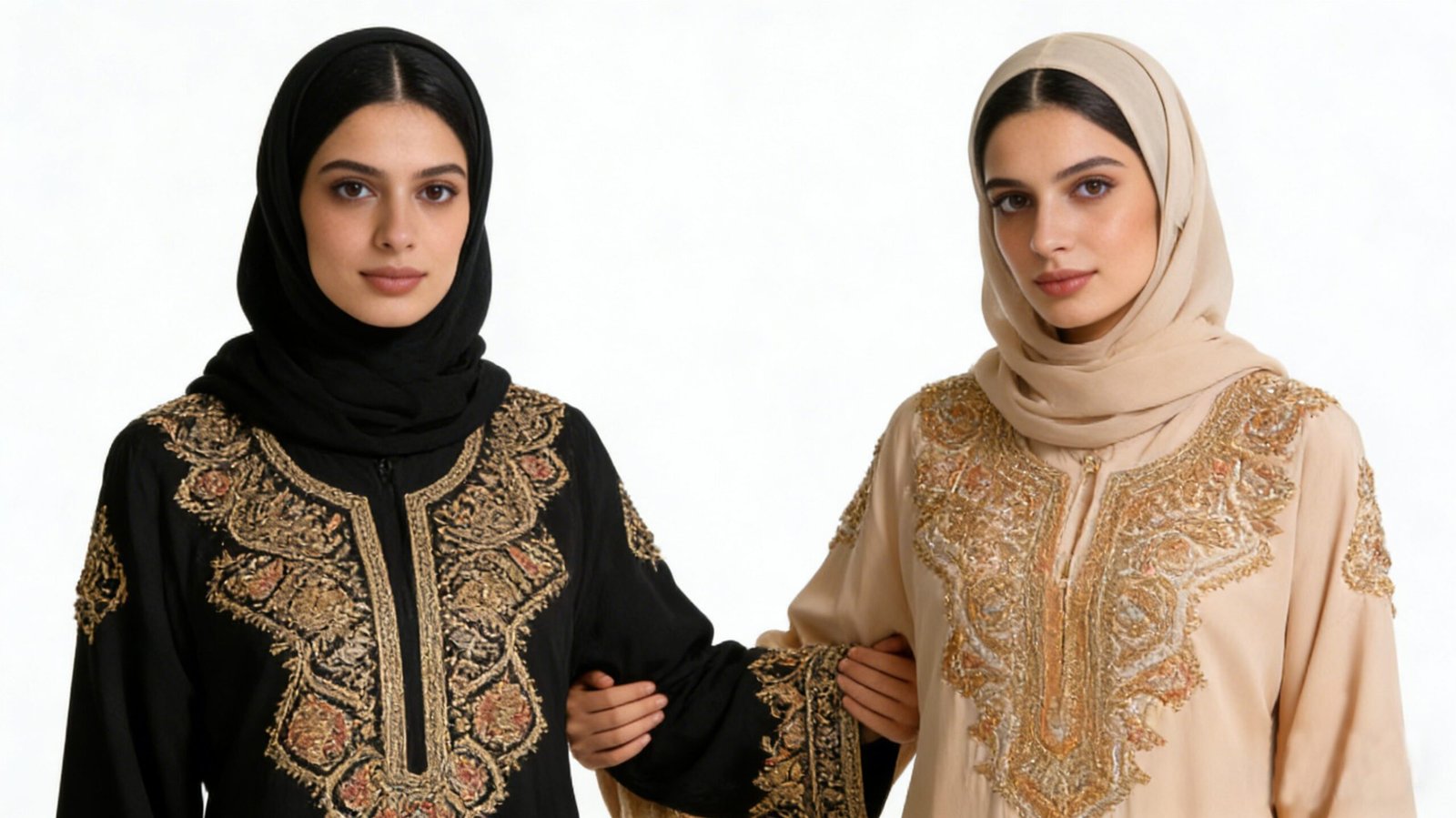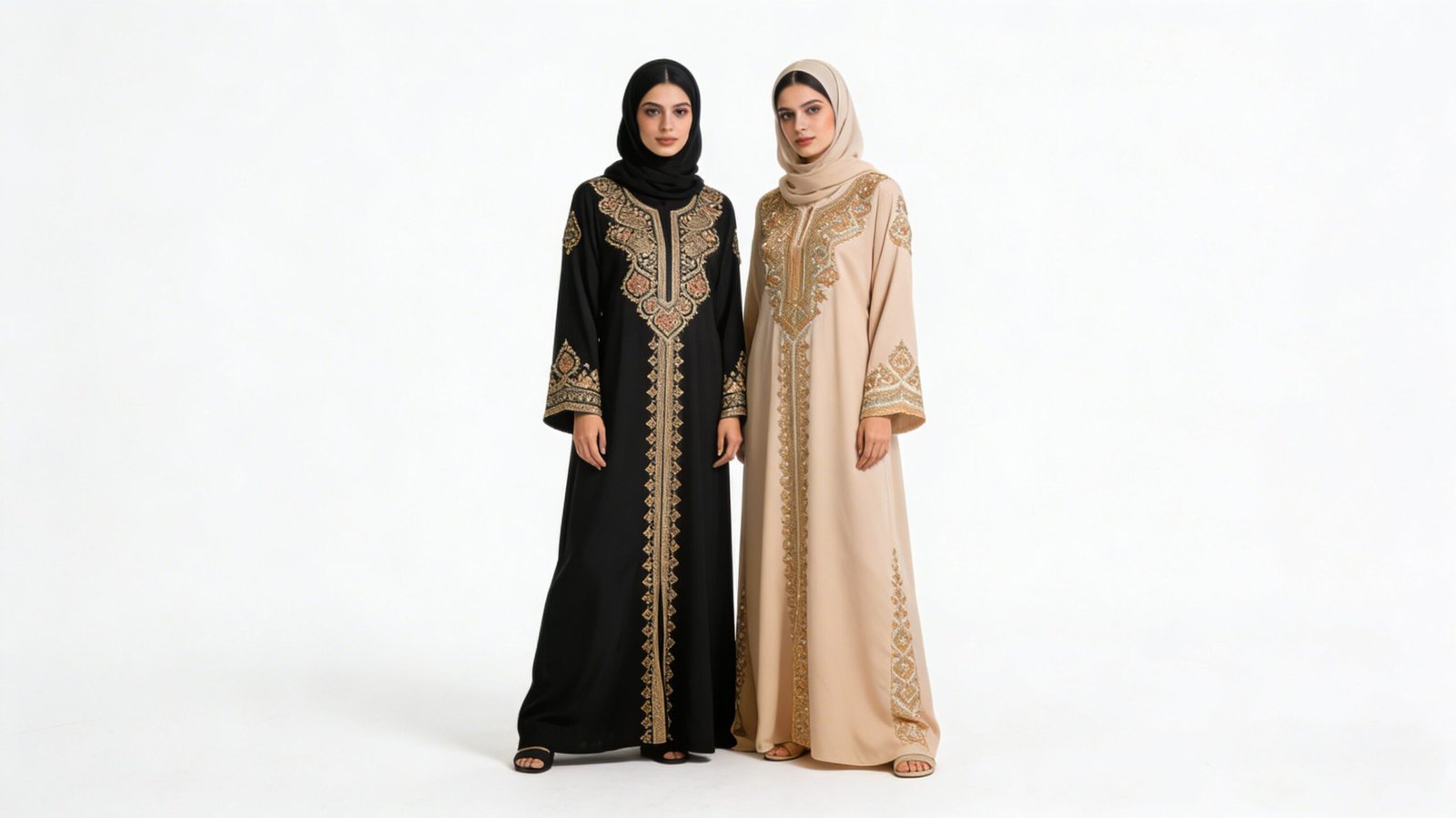
Have you ever tried on an Abaya that looked stunning—yet felt heavy, stiff, or suffocating after just a few hours? That’s not a design flaw. More often than not, it comes down to Abaya fabric weight.
Fabric weight plays a quiet but powerful role in how an Abaya feels throughout the day. It affects breathability, drape, movement, and even how confident a woman feels wearing it. Let’s break down how fabric weight shapes comfort—and how to choose the right balance for a truly Comfortable Abaya.
Table of Contents
- What Is Abaya Fabric Weight?
- Lightweight Fabrics and Everyday Comfort
- Medium-Weight Fabrics: Balance and Structure
- Heavy Fabrics: When Weight Works
- How to Choose the Right Fabric Weight
- FAQ
What Is Abaya Fabric Weight?
Fabric weight refers to how heavy a textile is per square meter (GSM). In Abaya production, this measurement directly influences how the garment breathes, flows, and reacts to body movement.
Lightweight fabrics tend to feel airy and fluid. Heavier fabrics feel more structured and luxurious—but can trap heat if used incorrectly. According to Textile School’s explanation of fabric weight, the wrong GSM choice can turn a well-designed garment into an uncomfortable one.
This is why experienced manufacturers focus on fabric weight early in the design process—not after sampling.
Lightweight Fabrics and Everyday Comfort
Lightweight Abaya fabrics—typically under 120 GSM—are ideal for daily wear, hot climates, and long working hours.
These fabrics allow air to circulate, reduce skin contact friction, and create a soft drape that moves naturally. Many brands designing everyday Abayas prefer lighter materials because they support all-day comfort without sacrificing elegance.
When paired with thoughtful tailoring, lightweight textiles form the foundation of a truly summer-ready Abaya fabric strategy.
That’s why most successful Comfortable Abaya design projects begin with lightweight or breathable mid-weight fabrics.
Medium-Weight Fabrics: Balance and Structure
Medium-weight fabrics sit in the sweet spot—usually between 120–180 GSM. They provide structure without feeling restrictive.
These fabrics are especially popular in transitional seasons or for customers who want modest coverage with a polished silhouette. As noted by MasterClass’s fabric weight guide, medium-weight textiles offer versatility without compromising wearability.
From a manufacturing perspective, medium-weight fabrics are easier to cut, stitch, and finish—making them a favorite for scalable collections and multi-market Abaya lines.
Heavy Fabrics: When Weight Works
Heavyweight fabrics—above 180 GSM—aren’t inherently uncomfortable. They simply serve a different purpose.
These fabrics shine in formal Abayas, winter collections, or luxury statement pieces. Their weight enhances drape, opacity, and visual richness. However, without proper ventilation and pattern design, they can feel restrictive.
Fashion technology platforms like Fibre2Fashion emphasize that comfort isn’t about “lighter is better”—it’s about choosing the right fabric weight for the right use case.
How to Choose the Right Fabric Weight
So how do you decide?
- Climate: Hot regions benefit from lighter fabrics.
- Wear duration: Daily wear demands breathability.
- Design intent: Structured styles may require more weight.
- Target market: Preferences vary by region.
This is where experienced OEM partners make a difference. A professional manufacturer doesn’t just follow trends—they help you match fabric weight with comfort, style, and long-term wearability. That’s exactly how scalable brands build trust.
Planning Your Next Abaya Collection?
Whether you’re refining everyday Abayas or developing a premium line, choosing the right fabric weight makes all the difference.
FAQ: Abaya Fabric Weight & Comfort
What fabric weight is best for a Comfortable Abaya?
Most comfortable Abayas fall between 90–150 GSM, depending on climate and usage.
Does heavier fabric always mean better quality?
No. Quality depends on fiber, weave, and finishing—not just weight.
Can lightweight Abayas still look luxurious?
Absolutely. Proper drape, tailoring, and fabric selection make lightweight Abayas elegant and premium.
Final Thoughts
Abaya comfort isn’t accidental—it’s engineered. And Abaya fabric weight is one of the most overlooked factors shaping how a garment feels in real life.
When comfort meets thoughtful design, customers notice—and they come back. Choose wisely, test thoroughly, and let fabric weight work for you, not against you.