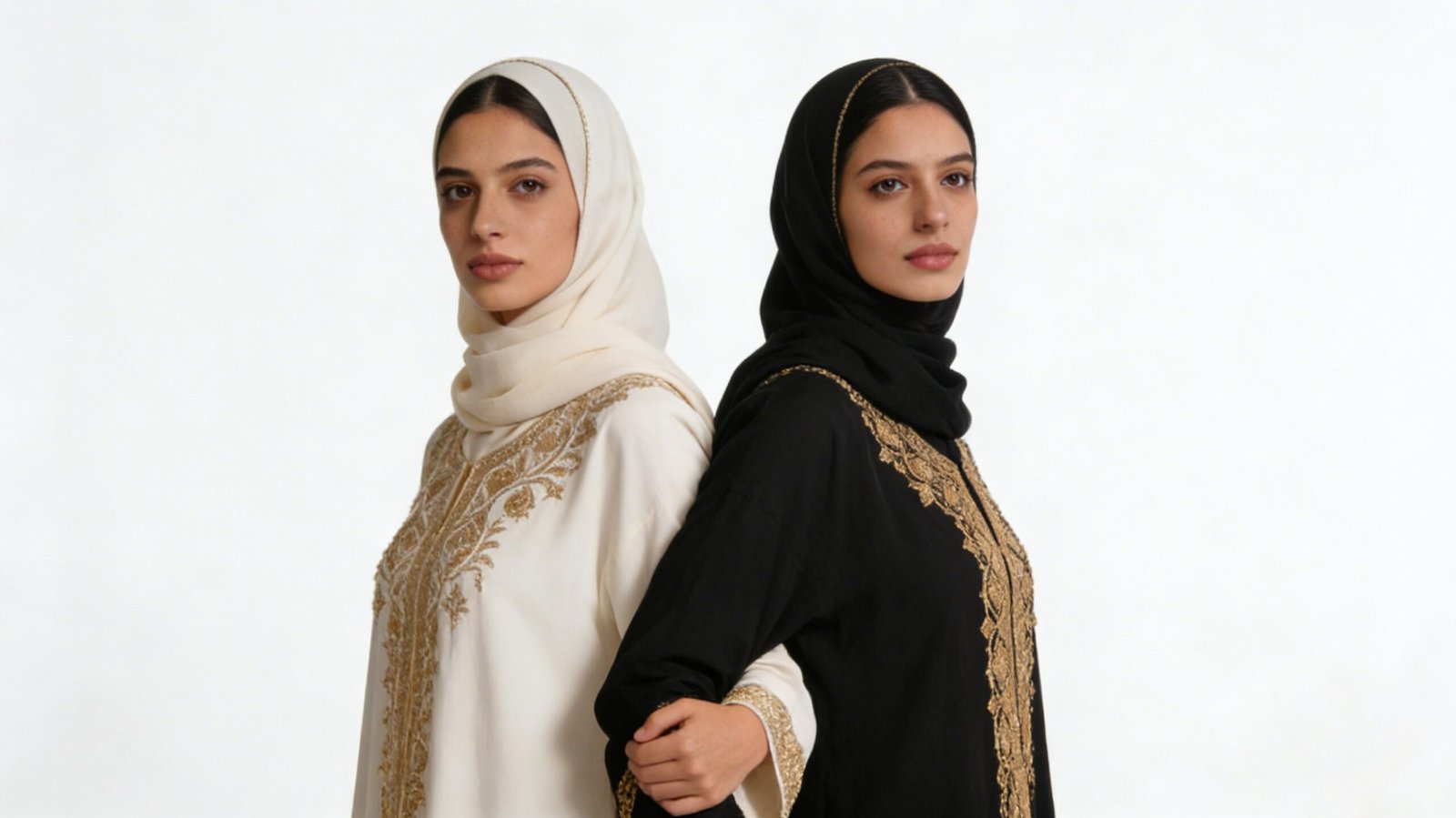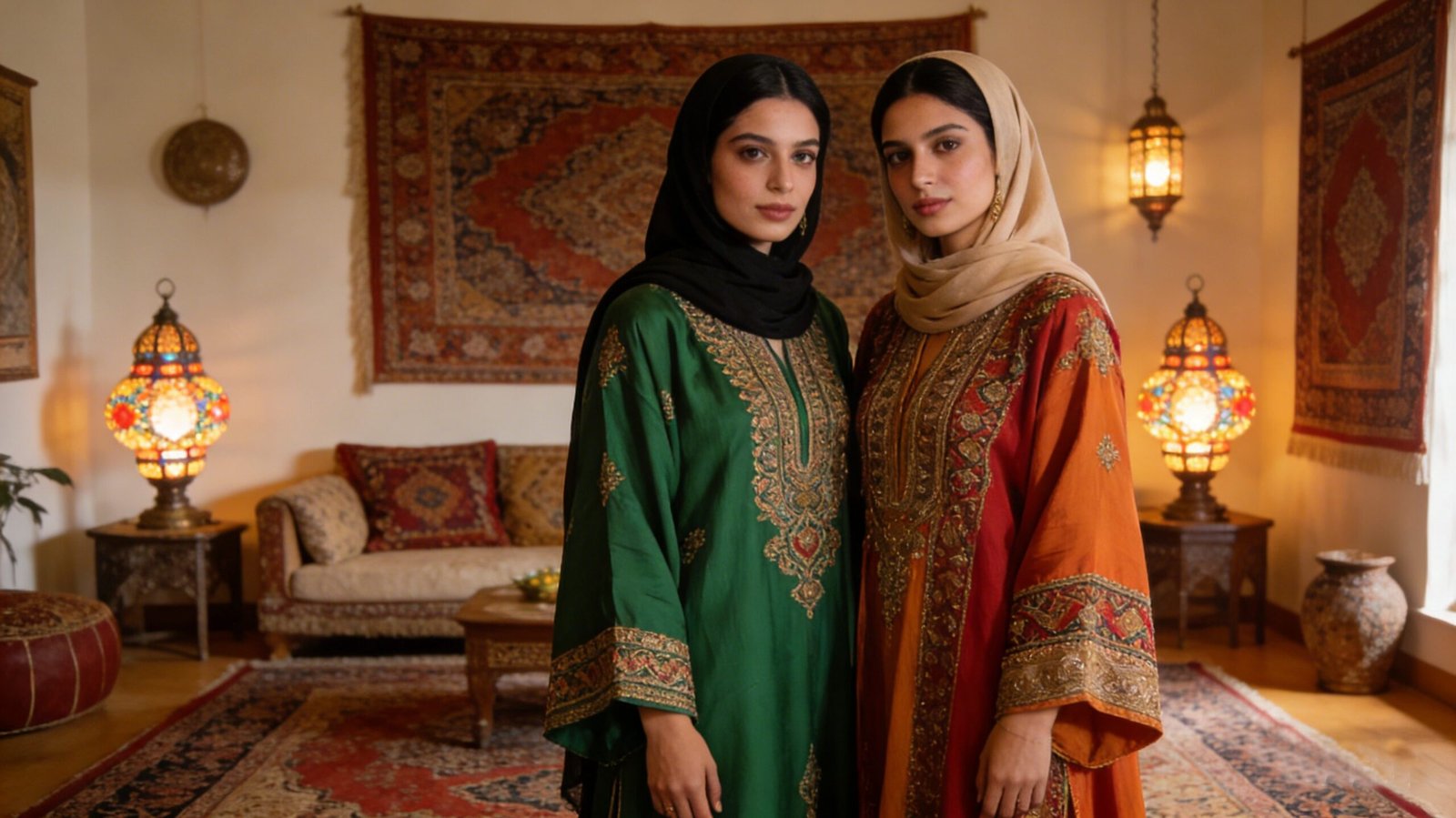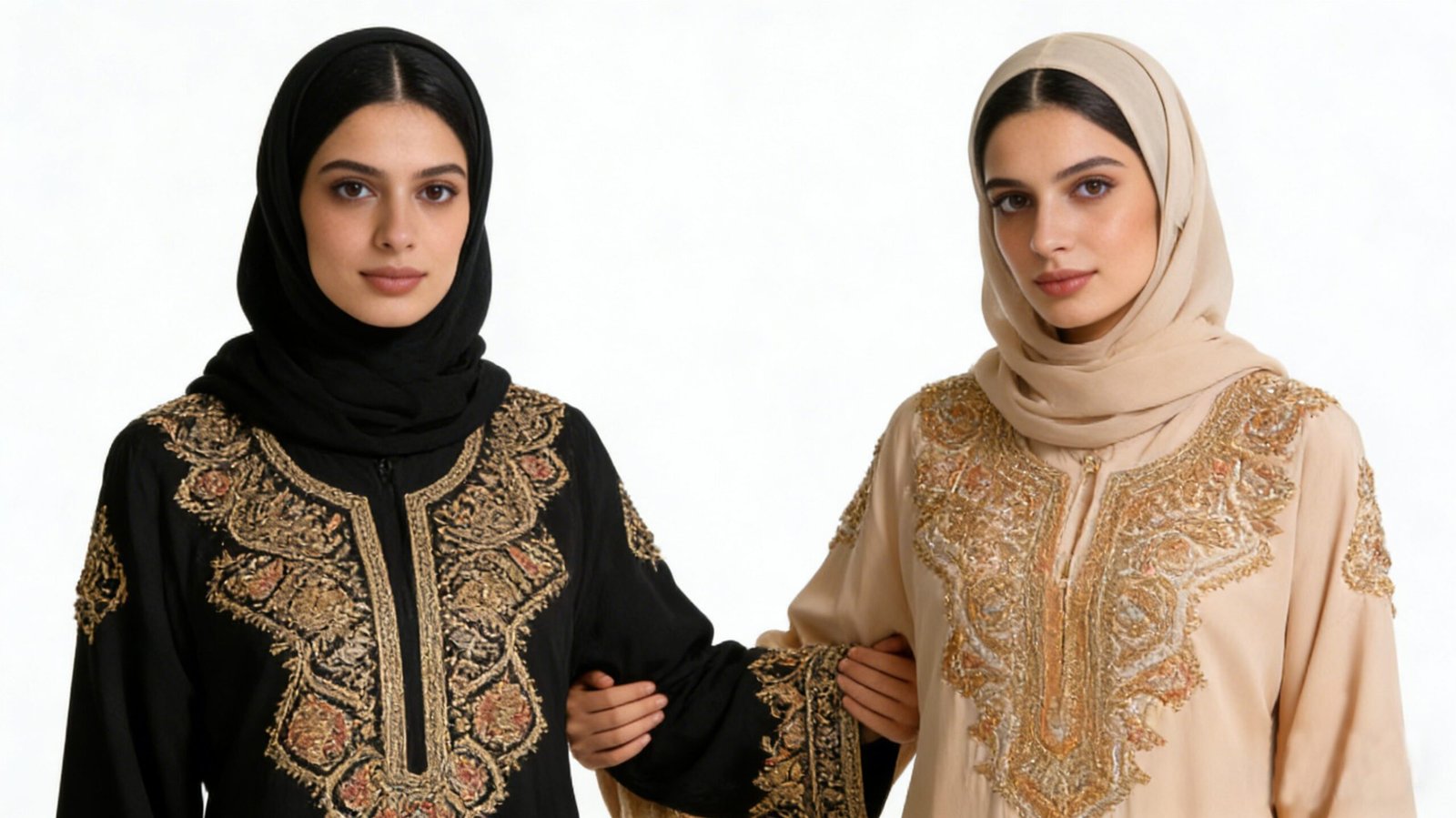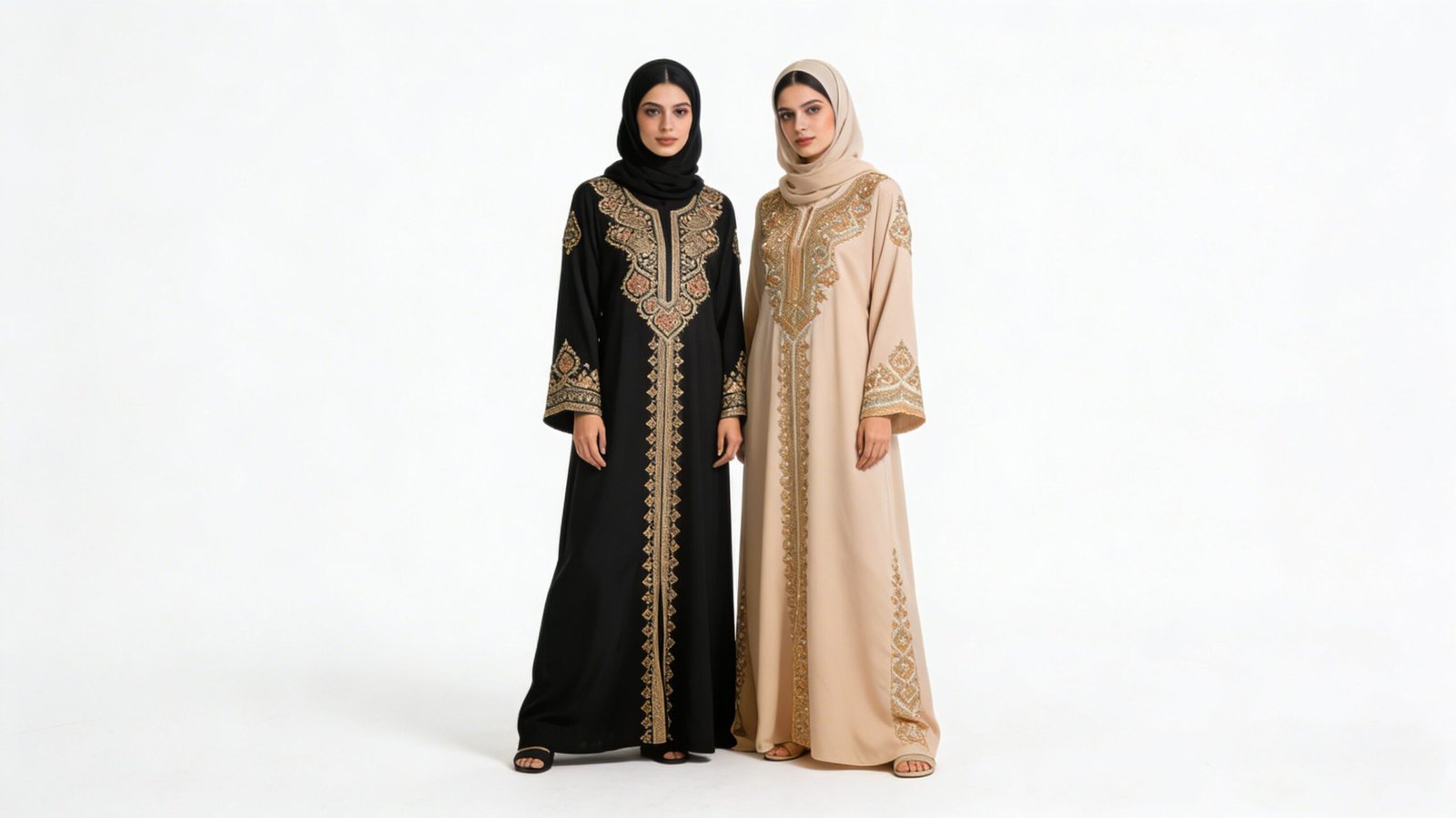
When buyers touch an Abaya, fabric speaks before design does. Is it soft? Does it breathe? Does it fall naturally, or feel stiff and synthetic?
If you’re choosing materials for your next collection, understanding the difference between Nida Abaya fabric, chiffon, and crepe isn’t just technical—it’s commercial. The right fabric choice can boost comfort, reduce returns, and directly impact how well your Abayas sell.
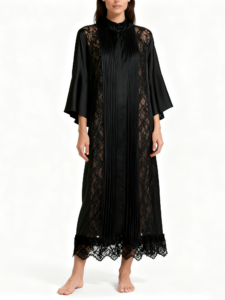
Table of Contents
- Quick Overview: Nida vs Chiffon vs Crepe
- Nida Abaya Fabric: Soft Luxury for Everyday Wear
- Chiffon Abaya Fabric: Lightweight but Tricky
- Crepe Abaya Fabric: Structure Meets Breathability
- Which Fabric Is Best for Your Market?
- FAQ
Quick Overview: Nida vs Chiffon vs Crepe
Think of these fabrics like personalities:
- Nida: Calm, smooth, dependable—perfect for daily wear
- Chiffon: Light, elegant, expressive—but needs support
- Crepe: Balanced, versatile, and commercially reliable
This kind of Abaya fabric comparison helps brands avoid costly fabric mistakes, especially when scaling production.
Nida Abaya Fabric: Soft Luxury for Everyday Wear
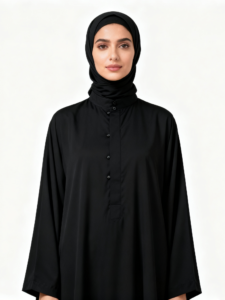
Nida fabric has become a staple in many Abaya collections—and for good reason. It’s smooth, lightweight, and gentle on the skin, making it ideal for everyday Abayas.
From a retail perspective, Nida Abaya fabric performs well because it:
- Drapes cleanly without clinging
- Feels breathable even in warm climates
- Offers a premium look without excessive cost
That’s why manufacturers often recommend Nida when brands ask about fabrics that sell consistently for everyday Abayas.
According to Textile School’s guide to Nida fabric, its popularity in modest fashion is driven by comfort, durability, and ease of care.
Chiffon Abaya Fabric: Lightweight but Tricky
Chiffon Abayas are visually striking. They move beautifully and add instant elegance—but chiffon isn’t always forgiving.
On its own, chiffon can be sheer and less breathable. That’s why it’s most effective when layered or used as an outer shell rather than a standalone fabric.
Many designers pair chiffon with inner linings or crepe bases, a method commonly discussed in MasterClass’s chiffon fabric overview.
Chiffon works best for:
- Occasion or formal Abayas
- Statement designs and seasonal drops
- Collections where aesthetics matter more than daily wear
Crepe Abaya Fabric: Structure Meets Breathability
Crepe sits comfortably between Nida and chiffon. It offers better structure than Nida while remaining more practical than chiffon.
Crepe Abayas hold their shape well, making them ideal for clean silhouettes and tailored cuts. At the same time, lightweight crepe versions remain breathable enough for summer collections.
This balance is why crepe is frequently featured in hot-climate Abaya recommendations.
Which Fabric Is Best for Your Market?
There’s no universal “best” fabric—only the best fit for your customer.
- GCC markets: Nida and lightweight crepe dominate due to comfort and durability
- Europe: Crepe and layered chiffon suit minimalist and modern tastes
- Southeast Asia: Breathable Nida and rayon blends perform best in humid climates
When brands work with an experienced OEM Abaya manufacturing partner, these fabric decisions are guided by testing, not guesswork.
Planning Your Next Abaya Collection?
Whether you’re scaling Everyday Abayas or launching a statement Formal collection,
we help brands choose the right mix—and manufacture it with confidence.
FAQ
Which Abaya fabric is best for everyday wear?
Nida Abaya fabric is widely preferred for everyday wear due to its softness, breathability, and durability.
Is chiffon suitable for hot weather?
Chiffon works best when layered properly. On its own, it may lack breathability for very hot climates.
Why do many brands choose crepe Abayas?
Crepe offers a strong balance between structure and comfort, making it suitable for both casual and semi-formal Abayas.
Final Thoughts
Fabric choice isn’t about trends—it’s about trust.
By understanding the real differences between Nida, chiffon, and crepe, brands can design Abayas that feel right, wear well, and sell with confidence across different markets.